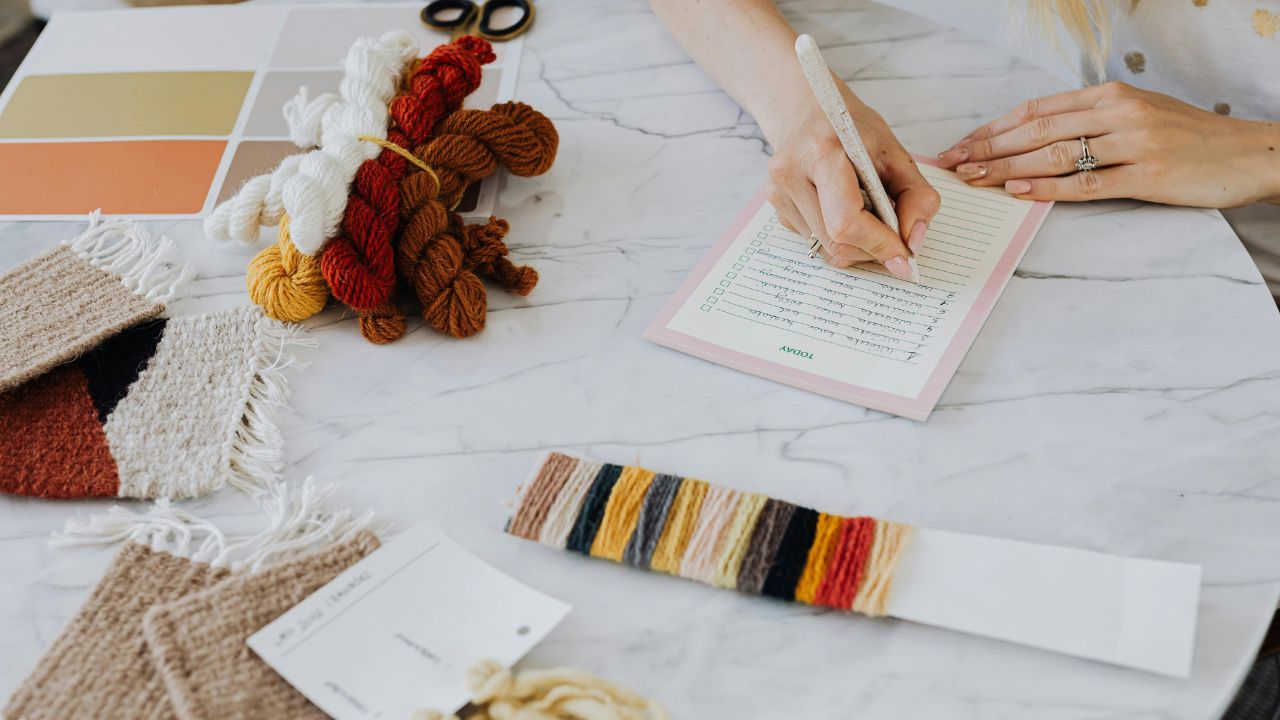
In a small house it does not imply that you have to give up the passion of knitting. You know the fight, if you ever stumbled on the yarn balls or scanned the entire house seeking that absentee crochet hook. Project bags, which knitters make through knitting, are a genius idea because they provide portability, organization and space the size of a single container. These specialized bags have changed the way crafts people keep their supplies and have transformed messy corners into clean work areas. You can transform your crafting process whether you are residing in a flat or just want to recover your dining table, the appropriate project bags have the potential to transform your crafting experience.
Why Knitting Project Bags Matter in Compact Living Spaces
Small houses pose special problems to hobbyists. Space is everything and the conventional ways of storage are not always as effective as they should be. Knitting materials always have a sinister manner of continuously cluttering surfaces, drawers and causing aesthetical mayhem that makes small rooms appear even smaller.
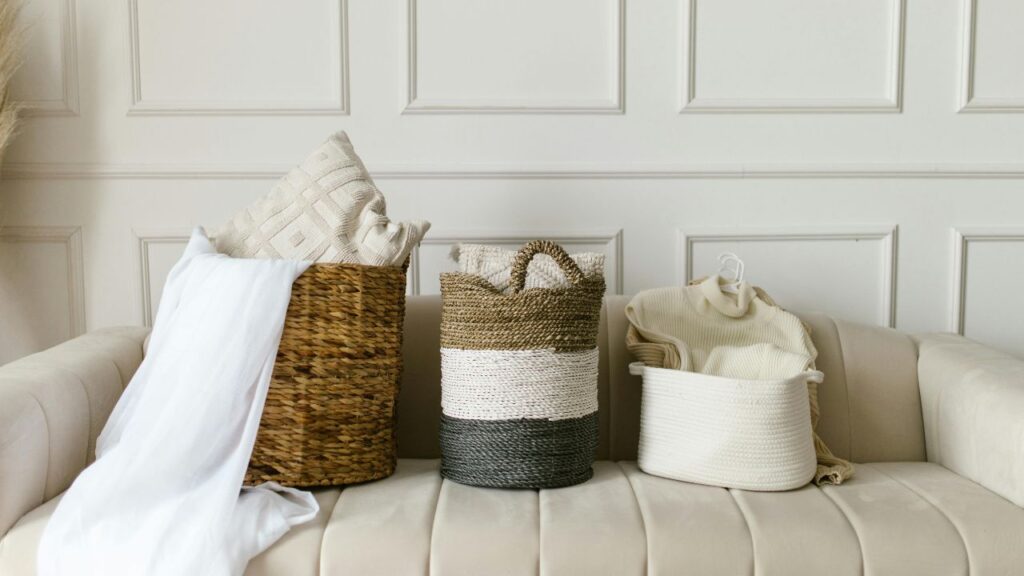
Project bags deal directly with these problems. These bags offer the advantage of taking up vertical storage space as opposed to bulky storage bins, which consume a lot of space that could otherwise house another project. You can hook them over, place them under furniture or place them on shelves.
It is also important for psychological advantage. When your crafting materials are always neat and easily available, you will find yourself using them. There is nothing more destructive to a creative flow than to spend twenty minutes searching for the needles matching each other.
Types of Knitting Project Bags for Different Space Constraints
Drawstring Bags
These cheap and easy-to-use choices are very suitable on small projects such as socks, hats, or baby clothes. They are soft-built, and thus they can fit into small-time gaps which rigid containers cannot reach. Seek out drawstring bags that have pockets inside, where you can separate the notions, so that the yarn will not tangle and you will not experience frustration.
The main advantage? You can compress them when empty, storing multiple bags flat until your next project begins. This is because they are flexible and suited to those individuals who alternate between multiple work-in-progress.
Zippered Totes
Zippered totes are your way when you require a little more structure and protection. They have reinforced sides which stand upright in these bags and thus it is easier to see and access your supplies. Most have numerous compartments to store patterns, measuring tape, scissors and stitch markers.
In the case of small homes, totes with flat bottoms can slide under beds or neatly stack on the shelves of closets. The zippered closure does not allow the escape of the yarn and keeps dust away, which is important when you can place the bag on the open shelves.
Clear Window Bags
There is no better thing than transparency when working with limited storage space. Project bags with clear windows enable you to know what is in a bag without necessarily having to open all the bags in the process of searching. This apparently minor detail will conserve a lot of time and avoid the terrifying effect of disorganized bags.
These are particularly effective when mounted on racks on the wall or peg boards. The graphic structure of the interface allows your brain to find the project you are going to work on today fast.
Hanging Organizers
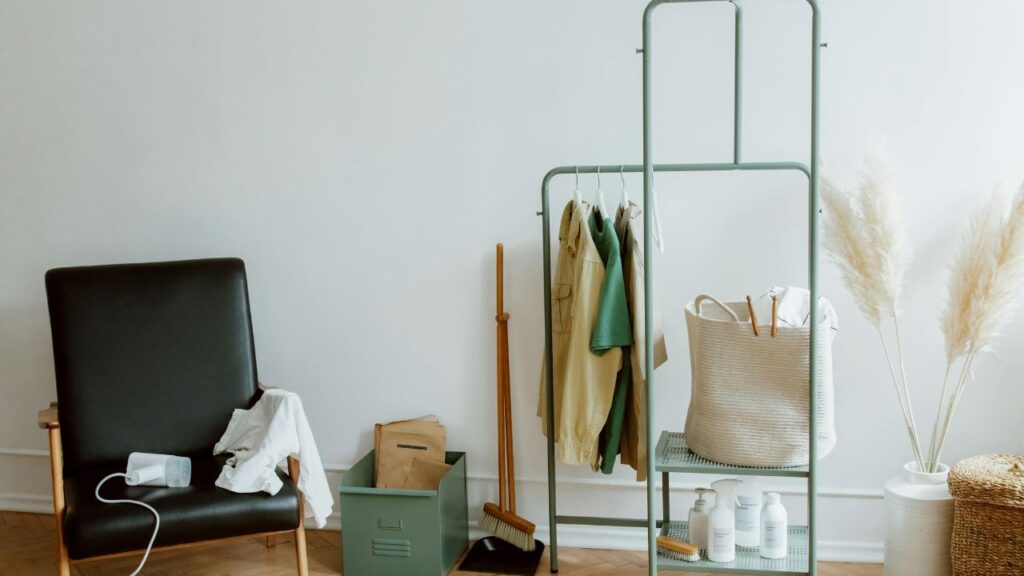
In really small areas, vertical storage would be necessary. You can attach knitting supplies hanging organizers to door, wall, or closet rods and use them to convert unused vertical space into useful storage. You can attach knitting supplies hanging organizers to door, wall, or closet rods and use them to convert unused vertical space into useful storage. And each pocket serves as a project bag on its own, where you keep works-in-progress apart and can access them whenever needed.
Hanging shoe organizers are used by some of the crafters as cost-effective. The compartments are multiple, and they give a splendid arrangement to the yarn skeins, pattern books and tools without taking up any floor space.
Strategic Organization Systems Using Project Bags
The One-Project-One-Bag Method
In this simple type of arrangement you allot each active project a bag of its own, with all the necessary material, a yarn, pattern, right needles, and special notions. When you are willing to knit, take one bag. All of that gets back into that bag.
The approach eliminates the usual issue of supply confusion across projects. You will never again have to guess which needles go with which sweater or inadvertently with the wrong yarn which you were going to use in a different pattern.
The Supply-Type Categorization
Alternatively, categorize bags by the type of supply and not the project. All needles are stored in one bag, notions and tools in another, and yarn of varying weights or color family is stored in separate bags. This system suits well when you would like to make decisions regarding the projects on the spot instead of planning them.
The trade off is that, when you are about to start a project, you will have to collect supplies out of numerous bags. Nevertheless, this strategy maximizes the space since full bags are kept not half-empty bags occupying the space
Color-Coded Storage
Use colored bags in identifying the project models. Garments, accessories, home decor projects, blue, green, and red. This type of visual system assists your brain to sort out organization immediately and decrease decision fatigue in choosing what knitting session to attend.
Color coding is also useful in getting other members of the household familiar with your system and thus, you can find it easier to keep the house in order when another member of the household is tidying up or providing clarification on where the item belongs.
Maximizing Small Spaces with Smart Bag Placement
Under-Furniture Storage
There is usually the unused space under the beds, sofas, and chairs. These gaps fit very well into slide-able project bags that are flat. Before buying bags, measure how much space you have so you can be sure they will fit into that space. The low profile bags can be designed to fit even in three inches of clearance.
Label the exposed edges so that you can distinguish the bags without fully removing the bags. This minor aspect is of great difference in terms of everyday functionality.
Behind-Door Solutions
Doors are a good investment in small houses. With multiple project bags, over-the-door hooks, pockets or mounted organizers can be used without taking away any width of the room. Doors to bedrooms, closets as well as bathroom doors can be turned into useful storage spaces.
By simply keeping in mind to consider door swing when selecting bag depth. Bags that are overstuffed and hang on doorframes are, soon enough, annoying inconveniences and not useful storage space.
Furniture with Dual Purpose
Natural project bag homes are the ottoman storage, bench seats with concealed spaces and coffee tables with shelving. Choosing furniture in small rooms, it is better to choose those that have storage options. You can store your knitting material in these works and it is not at all visible.
This integration helps maintain the visual calm that small spaces require. Guests never know your living room ottoman contains a dozen ongoing knitting projects.
Wall-Mounted Peg Systems
A plain pegboard or wall rail with hooks can be installed to provide expandable and customizable storage that can be altered as your needs vary. Slung project bags on hooks in the arrangement that will suit your workload at the moment.
This is especially good in the craft niches or at the favorite knitting chair. All of it is within reach without having to clean up surfaces or stand up every few moments.
Maintaining Organization Long-Term
The One-In-One-Out Rule
In cases where storage space is minimal, discipline becomes a very important factor. When you get a new project and a new bag to add to your collection, you will have to dedicate time to completing a project before getting another project to add. This practice prevents accumulation and forces honest assessment of whether you’ll actually complete everything you start.
Many knitters find this constraint actually increases their productivity and satisfaction. The reduction of the number of projects under rotation leads to a greater concentration of attention on the specific projects.
Regular Decluttering Sessions
Arrange an assessment of your project bags monthly or quarterly. Assess every work-in-progress objectively. Would you ever see through to the end of that sweater you were making two years back? And is the yarn still to your liking? At times the best thing to do is to acknowledge a project which ceases to generate excitement and reclaim the space.
Give away unused materials or recycle the yarn into those projects that you are truly passionate about. Space and the future self is thankful to you.
Documentation Systems
Take photos of each project bag’s contents and keep a simple spreadsheet or notebook logging what each contains. This external memory system prevents duplicate purchases and helps you remember what stage each project has reached. You won’t need to open every bag to figure out which scarf needs five more inches before binding off.
Digital documentation takes virtually no space while providing unlimited organizational capacity. Many knitters use apps specifically designed for tracking knitting projects, which can reference physical bag locations.

Choosing the Right Bags for Your Specific Situation
Consider Your Project Mix
Someone who knits primarily shawls and scarves needs different bags than someone tackling sweaters and afghans. Large projects require roomier bags with stronger handles, while small projects need less space. Audit your typical project list before investing in storage solutions.
Buying one style that handles ninety percent of your projects makes more sense than accumulating many specialized bags that overlap in function.
Durability Matters
Bags are subjected to more operations in small areas as people move them around to retrieve other things. This added wear and tear is reinforced by stitching and quality zippers and tough material. More expensive buying cheap bags that get out of shape after six months is even more expensive than getting quality initially.
Reviews that talk about longevity, check seam construction and test zippers are what to look out before purchasing some. Project bags need to last years not months.
Aesthetic Integration
These bags may be kept in your home hence opting to have designs that match with home decoration. Neutral colors are simple to put together, however, there is no need to hesitate to choose bags that leave you smiling. The reason is that your hobby ought to bring happiness and not something that you feel that you need to cover. It is common to see many crafters adorned with beautiful project bags. The right bags become functional art that reflects your personality.
Conclusion
One of the most intelligent investments that crafters can make in case of the space constraints is knitting project bags. These all-purpose storage solutions help to store supplies, to secure works in progress, and take advantage of all space you have at home. Strategic organization systems and making the right choice of bag models help you to pass your passion of knitting and not lose the living space and your mind.
The point is to discover a system that would fit your habit of crafting and space. Begin with a small collection of quality bags and test out various organization styles and make changes where necessary. You will find yourself asking yourself soon how you could have left without all these simple but transformative tools. Your little house can definitely fit your knitting habit but you will only need the right bags to do it.
Frequently Asked Questions
1. How many project bags do I need for a small home?
Three to five bags are comfortable in small spaces as opined by most knitters. This allows crafters to engage two or three projects at a time with special bags containing tools and spares that will not congest your storage capacity.
2. What size knitting project bag should I choose?
Knitters pack socks and other accessories into small bags (6-8 inches), shawls and scarves into medium bags (10-12 inches), and sweaters and blankets into large bags (14+ inches). In cases of doubt, size up to avoid tangles.
3. Can I use regular bags instead of specialized knitting project bags?
Yes, ordinary zippered bags are good and cheaper. Nevertheless, the knitting bags that designers create specifically contain handy items such as guides to yarn, pockets to house the notions inside, and snag-free fabrics that make it easier to knit.
4. Where should I store knitting project bags in small apartments?
Make use of under-bed storage, behind-door hooks, wall-mounted pegboards and furniture that has hidden compartments. Vertical storage solutions are the most effective in terms of space maximization and accessibility and organizing the projects.